
WHY BRANDS CHOOSE ELASTIC
Choosing a B2B platform that supports growth, not complexity
B2B ecommerce is evolving faster than many brands realize. Retail buyers have shifted to digital channels, with more than 70% of B2B buyers preferring to purchase online. Many of these buyers will switch vendors if the online buying experience is smoother elsewhere. Ecommerce is no longer a convenience. It is the industry standard, serving as a foundation for frictionless buying for retailers who demand transparency, speed, and accuracy from their brand partners.
Over 65% of B2B businesses globally report that their existing ecommerce platforms fail to deliver the modern digital experience buyers expect.
At the same time, industry research shows that most brands are dissatisfied with their current ecommerce technology. Over 65% of B2B businesses globally report that their existing ecommerce platforms fail to deliver the modern digital experience buyers expect, and more than half plan to replace their systems in the next two years. These numbers reflect a broader truth: legacy or consumer-first platforms may have served basic needs, but as buyer expectations rise and digital channels dominate sales, the limitations of those systems become barriers to growth.
Strategic Differentiation
The right platform turns ecommerce into a competitive advantage
When a brand evaluates migrating platforms, the goal should be more than ticking feature boxes. The decision should reflect a commitment to meeting buyers where they are and delivering an elevated experience that helps the brand grow revenue, strengthen relationships, and operate efficiently at scale. Choosing the right platform is not only about replacing what exists; it is about unlocking new potential in how retailers engage, discover products, and place orders.
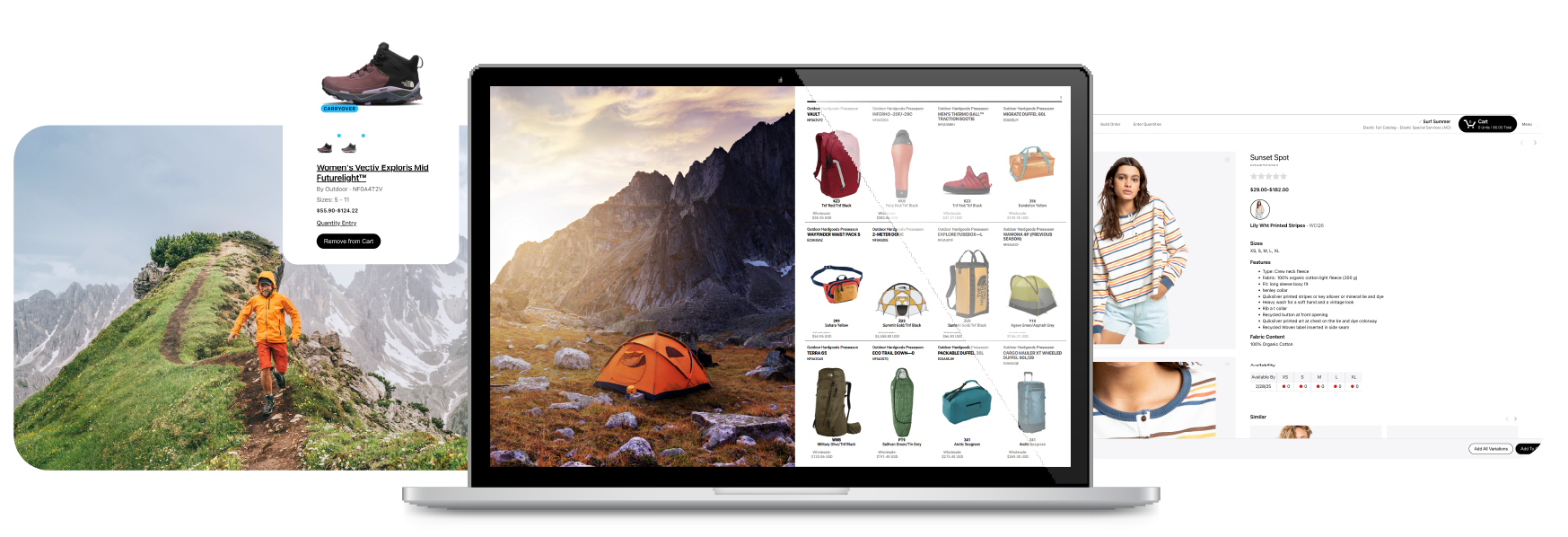
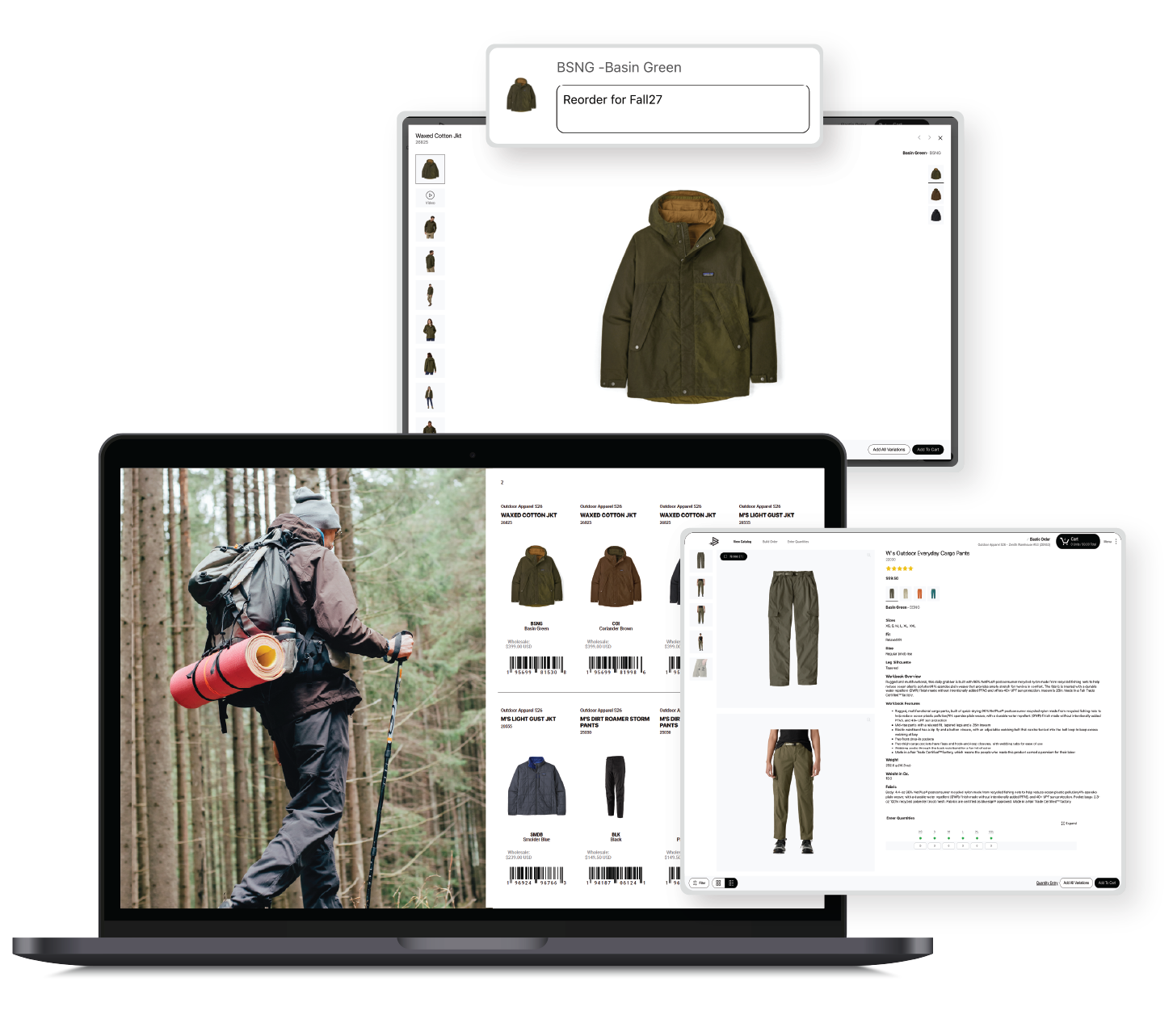
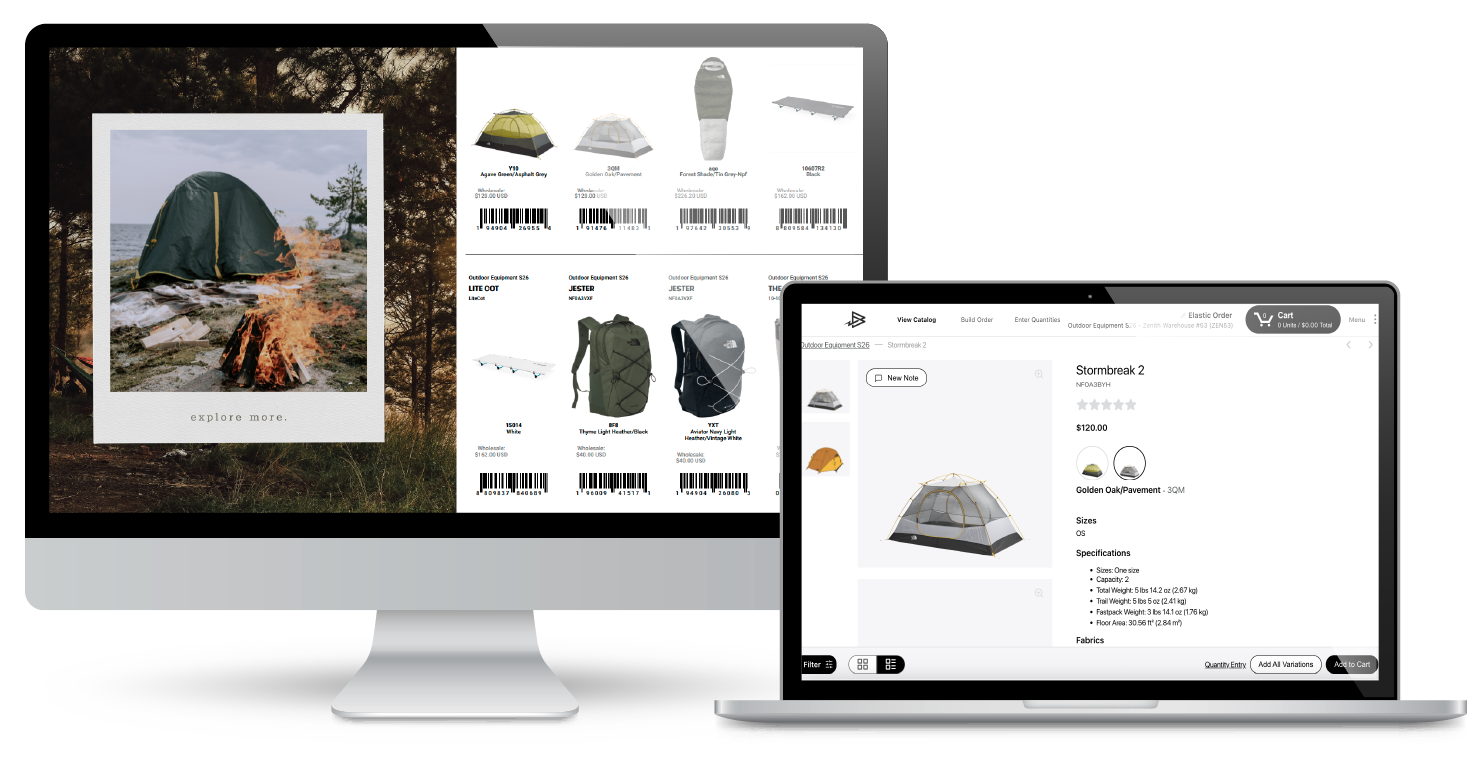
Elastic Suite was designed specifically for wholesale ecommerce with these initiatives in mind. Retailers prefer Elastic because it offers the clarity and usability they want, while internal teams benefit from deeper operational alignment. Instead of layering business integrations and complex pricing rules on top of a consumer platform, Elastic offers tools built expressly for B2B ecommerce that unite product catalogs, account pricing, order workflows, and sales execution into a single, coherent experience.
Delivering a B2C-like experience tailored to wholesale needs
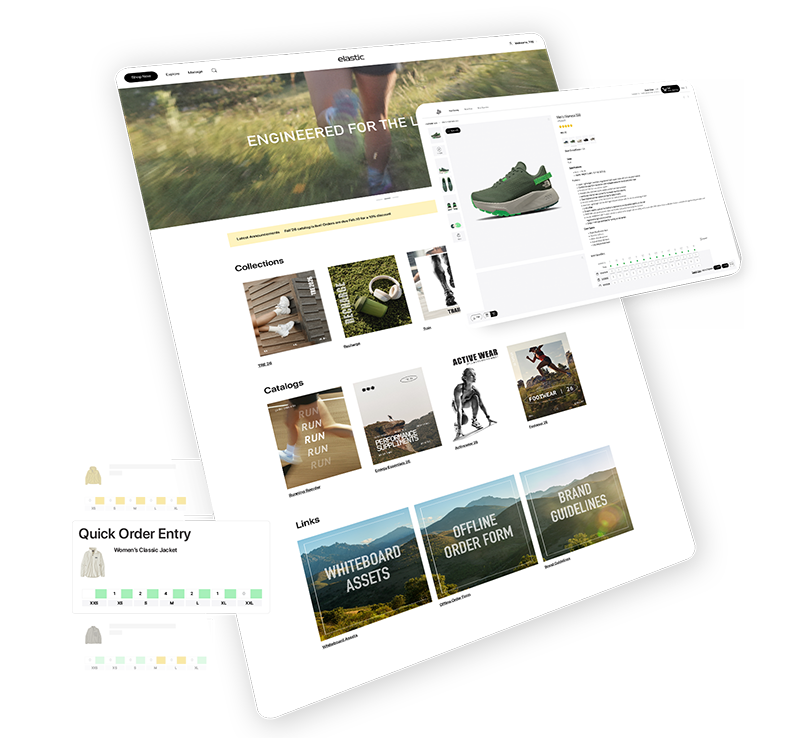
For too many brands, ecommerce today feels like a compromise between what buyers want and what the platform supports. Retail buyers increasingly expect the conveniences they experience in consumer shopping to carry over into their wholesale purchasing. They want rich product visuals, personalized content, tailored pricing, and self-serve ordering that makes their jobs easier. Research confirms that 66% of B2B buyers expect ecommerce experiences that resemble modern consumer ecommerce platforms, and nearly 70% want personalized interactions like what they experience as consumers.
Elastic answers these demands by offering a B2C-like buying experience that retains the complexity and precision required for wholesale orders. Retailers can browse immersive digital catalogs, access tiered pricing that reflects their unique contracts, and build orders with confidence. These capabilities do more than streamline transactions. They build buyer confidence, increase conversion, and reduce reliance on manual communication channels that slow the sales cycle.
WHOLESALE COMPLEXITY
Why ERP add-on B2B solutions fall short for wholesale ecommerce
As brands evaluate options, many consider extending their ERP with a B2B ecommerce add-on. While these solutions can handle basic transactions, they are not built for wholesale complexity. ERP commerce tools are designed around procurement and operational efficiency, then configured to approximate wholesale selling. This often results in rigid experiences that struggle to support seasonal sell-in, curated assortments, and rep-driven sales workflows. Merchandising becomes an afterthought, requiring additional CMS or PIM tools and ongoing development just to replicate a basic sell-the-line experience.
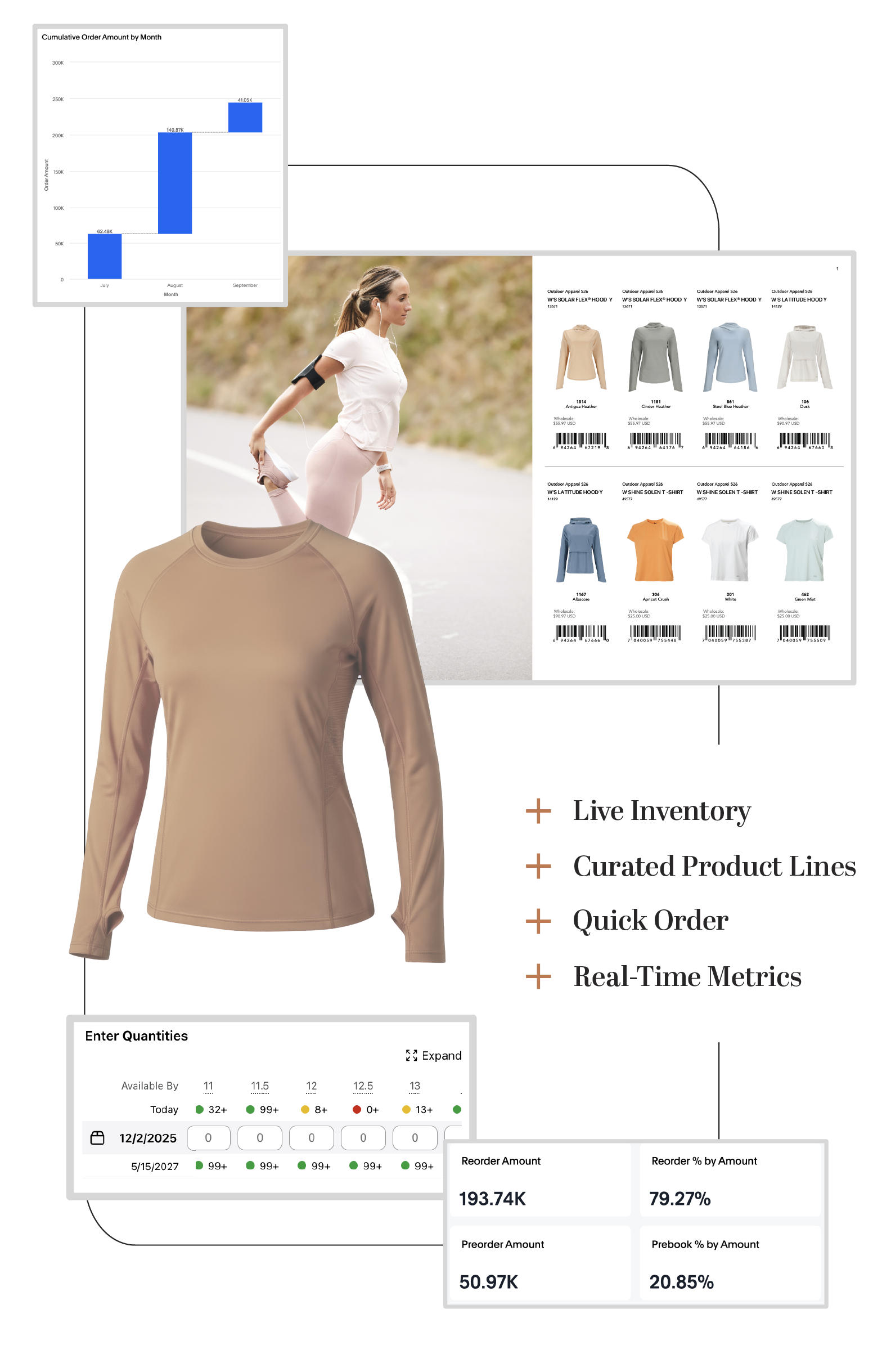
Elastic takes a fundamentally different approach. Wholesale is not layered on. It is the foundation. Elastic is built around how brands and retailers collaborate, with digital line sheets, curated collections, and visual storytelling at its core. It supports collaborative selling between reps and buyers, not just self-serve ordering. And because these workflows are available out of the box, brands reach value faster without long implementation cycles or heavy customization. For companies focused on growth, ERP add-ons often reinforce complexity, while Elastic removes it.
REAL METRICS
Measurable impact after adopting Elastic Suite
The most convincing proof of the value in selecting the right solution is in the results. Leading brands that use Elastic to improve experiences see improvements in both engagement and revenue. One enterprise customer reported an 87% increase in dealer engagement and 123% year-over-year order growth after migrating from another B2B platform to Elastic, while eliminating over $100,000 in printed catalog costs per year. Another client emphasized how a unified platform enabled them to standardize ordering processes and scale globally with far less friction.
These outcomes demonstrate how a platform built for wholesale ecommerce can transform the way businesses operate. Retailers buy more often and with greater volume when the experience aligns with their expectations. Internal teams can focus on strategy instead of firefighting integrations or managing spreadsheets outside the ecommerce system. ERP add-on B2B solutions and B2C-first platforms simply cannot compete with Elastic’s core functionality. The payoff of making the switch to Elastic shows up in higher order frequency, stronger retailer loyalty, and reduced operational complexity.
SALES GROWTH SUPPORT
Future-ready ecommerce that
supports growth
Industry analysts project that B2B ecommerce sales will continue to expand strongly in the coming years, outpacing offline channels and reshaping how business buyers research, compare, and purchase products. Brands that delay migrating risk falling further behind competitors that are investing in technology to deliver modern, digital-first experiences.
When brands partner with Elastic, they are choosing a platform that aligns with where the market is headed, not where it has been. It means giving retailers the digital buying experiences they prefer, while providing internal teams with the tools to operate more efficiently and strategically. It is not a short-term upgrade. It is a long-term foundation for commerce that supports growth, reduces friction, and elevates the entire wholesale experience.
Purpose-built for modern wholesale
Bring reps, merchandising, and digital buying together in one purpose-built platform designed to simplify complexity and drive growth.