


COMPARE B2B PLATFORMS
Shopify B2B in 2026: What Wholesale Brands Should Evaluate
Shopify B2B lets brands manage wholesale and direct-to-consumer (DTC) sales in one platform. For brands already using Shopify for DTC, this can make adding a wholesale channel easier.
The right fit depends on how you sell wholesale. This guide covers catalogs, ERP integrations, ordering, and sales tools to help brands assess their options, including when a dedicated wholesale platform like Elastic Suite makes sense.
KEY TAKEAWAYS
Shopify offers native B2B features on Basic, Grow, Advanced, and Plus, with capabilities and limits that vary by plan.
Wholesale selling involves more than checkout. Brands also need to support product presentations, account-specific pricing, seasonal orders, and retailer relationships.
Elastic brings wholesale ordering, visual merchandising, and sales tools together in a dedicated B2B platform.
ERP integrations should keep business information accurate and support the rules behind your wholesale orders.
Brands can keep Shopify for DTC and connect it with Elastic for wholesale.
OVERVIEW
What is Shopify B2B?
Shopify B2B is a set of wholesale features within Shopify’s commerce platform. Brands can create company accounts, offer wholesale pricing, set payment terms, and let business buyers place orders online.
These features are available on the Basic, Grow, Advanced, and Plus plans. Brands can manage DTC and B2B through a combined store or create a separate B2B store.
For existing Shopify users, this provides a familiar way to introduce wholesale ordering. The broader question is how well that setup supports the work surrounding an order, from presenting a seasonal collection to managing retailer pricing and delivery dates.
CATALOGS & PRICING
How does Shopify B2B handle catalogs and pricing?
Shopify B2B catalogs control which products business buyers can access and the prices they pay. Quantity rules let brands set minimums, maximums, and ordering increments, such as cases of six. Volume pricing provides discounts based on the quantity ordered. Catalog management differs by plan:
Active catalogs assigned across B2B markets
Direct catalog assignment to companies or locations
Quantity rules and volume pricing
Basic, Grow, Advanced
Up to three
Not included
Included
SHOPIFY PLUS
Unlimited
Included
Included
Shopify Basic, Grow, and Advanced support up to three active catalogs across B2B markets. Shopify Plus supports unlimited catalogs and lets brands assign them directly to individual companies or locations for account-specific pricing. All four plans include quantity rules and volume pricing.
Brands that use shared wholesale price lists may fit within the three-catalog limit. Brands that need to assign negotiated pricing directly to individual companies or locations require Shopify Plus.
What changes when retailers have different prices?
A brand that gives all dealers the same discount has different needs than one that negotiates prices with each retailer. Those agreements may also vary by region or product category.
If the brand manages pricing in its ERP, the connection needs to show each retailer the right products and agreed prices. It also needs to reflect changes without requiring the team to update the same information in several places.
Catalog limits are therefore only part of the decision. Brands also need a practical way to maintain prices and product access as their retailer network grows.
Elastic supports customer-specific pricing and curated product collections. Its ERP integrations connect the wholesale buying experience with the systems where brands manage that information.
ERP INTEGRATIONS
Why does ERP integration matter for Wholesale?

An enterprise resource planning system, or ERP, helps a brand manage business information, including inventory, pricing, customers, and orders. Connecting it to a wholesale platform reduces duplicate data entry and helps reps and retailers work with accurate information.
The details of that connection matter. Sharing product names and descriptions is relatively straightforward. Supporting negotiated prices, stock across several warehouses, and different delivery dates requires more.
For example, a retailer may order products at an agreed price for delivery across several months. The wholesale platform and ERP need to share the information required to process that order correctly.
How does Shopify B2B connect to ERP systems?
Shopify can connect to ERP systems through ready-made integrations, services that move information between systems, or custom connections.
Support varies by integration. Shopify notes that some App Store integrations do not fully support B2B companies and catalogs. That can affect how customer records and pricing move between systems.
The important question is what the connection can handle. Brands need to know which information it shares, how quickly changes appear, and who resolves problems when an update fails.
How does Elastic approach ERP integration?
Elastic supports more than 250 integrations and connects product, inventory, pricing, customer, and order information across business systems.
Dedicated options include NetSuite, SAP S/4HANA, and Microsoft Dynamics 365 Business Central.
Elastic’s integration team works with the brand’s IT team to define the setup. Together, they define what information to share, how often to update it, and which business rules it must follow.
How Municipal connects its wholesale operations
Before Elastic, Municipal managed wholesale orders in spreadsheets and entered them into NetSuite manually. Elastic connected its wholesale platform with NetSuite and pulled product images and content from Shopify, which Municipal uses for DTC.
The team also created custom catalogs for different wholesale channels, including golf, action sports, and resorts.

PREBOOKS & REORDERS
How do prebook and reorder differ?
Prebooks let retailers order seasonal products ahead of delivery. Reorders help them replenish inventory throughout the year.
These purchases involve different tasks. A seasonal prebook may require a rep to present a new collection, recommend an assortment, and schedule several deliveries. A reorder often involves familiar products that a retailer needs quickly.
A wholesale platform should support prebook planning and the speed buyers expect when reordering.
How does Shopify B2B support seasonal ordering?
Shopify B2B supports self-serve ordering, draft orders, and reorders. Brands with seasonal prebook requirements should look closely at how the proposed setup handles them.
Shopify’s standard preorder purchase options don’t support B2B. A standard preorder app therefore doesn’t support a brand’s wholesale prebook process.
Accepting an order before shipment is only one part of seasonal selling. Brands may also need to present future collections, plan assortments, show future availability, and assign different ship dates within an order.
How does Elastic support prebooks and reorders?
Elastic supports seasonal prebooks and replenishment orders within its wholesale platform. Reps can build assortments for upcoming seasons, and retailers can return to reorder throughout the year.
Multi-ship ordering lets users create orders with multiple scheduled ship dates. Merchandising tools help reps present products and plan assortments before buyers submit their orders.
This connects product selection, seasonal planning, and ordering into a single buying experience.
SALES TOOLS
What sales tools do wholesale reps need?
Wholesale reps do more than enter orders. They recommend products, present collections, and help retailers decide what to carry.
Their tools should support these activities, along with account management and checkout. For example, a brand that sells through seasonal appointments may need a rep to build a store-specific presentation before the retailer is ready to order.
What sales rep tools does Shopify B2B offer?
Shopify lets brands give sales staff access to assigned company locations. Depending on permissions, reps can view account information, create draft orders, and help customers complete purchases.
These features support account service and order entry. Brands that also rely on visual product presentations and assortment planning need to account for how reps will complete that work, including any additional tools.
How does Elastic support rep-led selling?
Elastic connects product presentation, assortment planning, and ordering through tools built for wholesale teams:
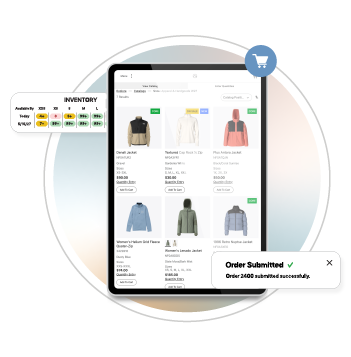
Whiteboard: Arrange products on store photos or display layouts to create shoppable merchandising presentations.
Assortment Builder: Select products around a retailer’s needs, season, region, or promotion.
Custom Collections: Share selected products in branded catalogs with customer-specific pricing.
Campaigns: Send shoppable emails and track the sales they generate.
A rep can use these tools to recommend a collection, show how products work together, and give the retailer an easy way to order. The team can also continue selling between appointments by sharing relevant collections and product updates.
EVALUATION
How should brands compare wholesale platforms?
Compare platforms through real tasks your teams and retailers perform. A feature list provides a starting point, but a realistic demonstration shows how those features work together.
01
Follow an order from planning to submission
Use examples from your business, including a seasonal prebook and a replenishment order.
For the prebook, include assortment planning, retailer pricing, and multiple ship dates. For the reorder, focus on how quickly a buyer can find products, check availability, and submit the order.
Note any steps that require another app, a spreadsheet, or someone to re-enter information.
02
Check how information moves between systems
Identify where your team maintains product details, prices, inventory, customer records, and orders. Then confirm how the wholesale platform receives and updates that information.
Include negotiated prices, custom fields, and other requirements that a standard demonstration may leave out. Establish who monitors the connection and resolves errors after launch.
03
Include retailers and sales reps
Ask retailers to complete common buying tasks. Have reps prepare a presentation and build an order for a real account.
Look at how easily they find information, select products, share recommendations, and complete purchases. Their feedback can reveal extra steps that a feature list misses.
04
Compare the full cost
Compare costs over the same period for each proposal. Include subscriptions, integrations, additional apps, setup, training, maintenance, and internal support.
Also account for manual work that remains after launch. The useful comparison is the cost of supporting your wholesale process.
IS SHOPIFY ENOUGH?
When should brands consider a dedicated B2B platform?
Consider a dedicated wholesale platform when your business relies on seasonal planning, rep-led selling, retailer-specific assortments, or detailed ERP requirements.
These needs can arise at different stages of growth. Account count alone does not determine fit. A brand with a smaller retailer network may have complex pricing and delivery requirements, while a larger network may use more standardized processes.
Shopify B2B can support brands whose needs align with its catalog, ordering, payment, and integration capabilities.
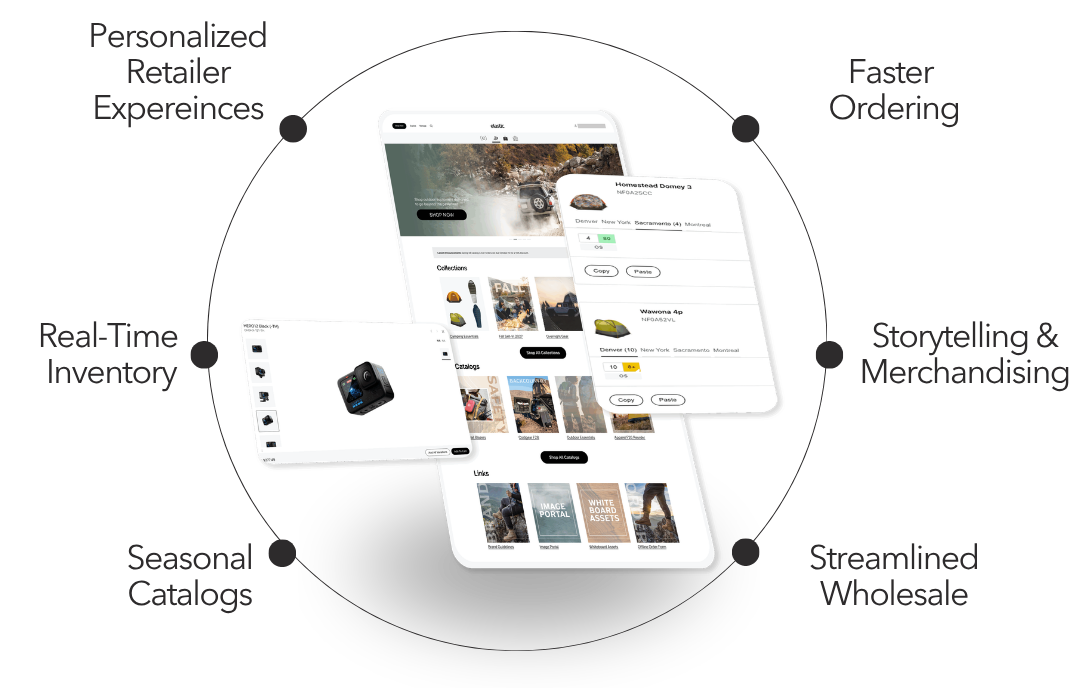
Elastic focuses on wholesale selling, merchandising, and retailer buying.
The decision depends on how much of the process each solution supports and what the brand needs to add or maintain.
BEST OF BOTH WORLDS
Can brands keep Shopify for DTC and use Elastic for wholesale?
Yes. Brands can keep Shopify for DTC and connect it to Elastic for wholesale using the Elastic Shopify Connector.
The connector shares information such as products, customer accounts, inventory, pricing, and orders. During setup, the teams define how that connection works alongside the brand’s ERP and other systems.
This lets brands keep their DTC storefront while adding wholesale tools for reps and retailers.

How Lems uses Shopify and Elastic together
Footwear brand Lems kept Shopify for DTC and added Elastic to support its growing wholesale business. The Shopify Connector keeps product and order information connected, while retailers use Elastic to browse catalogs and place wholesale orders.
In the six months after its Elastic launch, Lems reported a 439% increase in wholesale gross merchandise value (total order value). Reorders accounted for 68% of that value.
PURPOSE-BUILT FOR B2B
Support the full wholesale selling process with Elastic
The right wholesale platform supports the work before, during, and after an order. It helps reps present products, makes buying easier for retailers, and connects orders with the systems that run the business.
Elastic brings digital catalogs, visual merchandising, prebooks, reorders, and sales tools together in a platform designed for wholesale. Brands can support seasonal selling and everyday replenishment while giving reps and retailers tools designed around their needs.
Explore Elastic’s wholesale platform to see how it can support your brand’s sales.

FREQUENTLY ASKED QUESTIONS
Still have questions?
Is Shopify B2B available on every paid plan?
No. Shopify B2B is available on Basic, Grow, Advanced, and Plus. It is not available on Starter or Retail. Features and limits vary by plan.
How many B2B catalogs does Shopify support?
Basic, Grow, and Advanced support up to three active catalogs assigned across B2B markets. Plus supports unlimited catalogs and direct assignment to companies and company locations.
Does Shopify B2B support seasonal prebook?
Shopify’s standard preorder purchase options don’t support B2B. Brands with seasonal prebook requirements need to assess how a proposed solution supports future orders, assortments, and delivery schedules.
What is the difference between Shopify B2B and Elastic?
Shopify B2B adds wholesale features to Shopify’s broader commerce platform. Elastic focuses on wholesale selling and buying, with tools for seasonal orders, visual merchandising, personalized assortments, and rep-led sales.
Can Elastic connect with an existing ERP?
Yes. Elastic offers ERP integrations, including options for NetSuite, SAP S/4HANA, and Microsoft Dynamics 365 Business Central. During setup, the teams define what information to share and how the connection supports the brand’s business rules.
Does using Elastic require replacing Shopify?
No. Brands can keep Shopify for DTC and use Elastic for wholesale. The Elastic Shopify Connector shares information between the platforms.