

Align Wholesale Sell-In with Retailer Open-to-Buy Cycles
KEY TAKEAWAYS
Retailer Open-to-Buy (OTB) cycles determine when buyers have budget for seasonal, at-once, replenishment, and trend-driven orders.
Elastic internal order data from 2022–2025 found that proposals delivered within 10 days of an OTB refresh were associated with 18–24% higher purchase order values.
Brands can capture available budget by tracking retailer buying cycles and quickly presenting account-specific assortments backed by sell-through, inventory, and data.
What is open-to-buy and why does it matter to wholesale brands?
Open-to-Buy, or OTB, is the budget a retailer has available for new inventory purchases during a specific period. It gives buyers a financial limit for what they can commit to and when they can commit it. The standard OTB formula is:
OTB = Planned Sales + Planned Ending Inventory − Beginning Inventory − On Order
When OTB is available, a buyer has room to place new orders. When that budget is already committed, even a strong assortment may have to wait.
That makes timing critical in wholesale selling. Elastic internal order data from 2022–2025 found that brands that presented proposals within 10 days of a retailer’s OTB refresh saw 18–24% higher purchase order values than brands that pitched outside that window.
The takeaway is simple: a strong assortment matters, but the right assortment at the right time can matter just as much.
How should brands align sell-in with retailer buying cycles?
Most brands build their wholesale calendars around their own milestones. They plan trade shows, product launches, production deadlines, and seasonal collection dates.
Retailers plan around something different: their financial and inventory calendars.
Start by understanding when each account refreshes its OTB and when buyers actively allocate budget. Then build those windows into your account strategy.
OTB cadence varies by retailer and category. Some accounts review budgets monthly. Others work on quarterly or semi-annual cycles. Your sales team should know the cadence for each priority account rather than rely on one standard sell-in calendar.
For seasonal business, plan so Spring/Summer and Fall/Winter pre-books reach buyers while they are actively allocating budget, not just when your sales team is ready to present the collection.
The goal is not to abandon your existing wholesale calendar. It is to layer retailer buying cycles into it.
How can brands capture more at-once OTB budget?
OTB does not disappear after the seasonal pre-book.
Retailers can have budget available throughout the season for replenishment, emerging trends, missed inventory needs, or purchases that perform better than expected. These opportunities move quickly.
Brands need to make it easy for buyers to act when that budget becomes available.
That starts with inventory visibility. Buyers need confidence that products shown as available can ship. They also need current pricing, product information, and order details.
It also requires year-round ordering. Buyers should not have to wait for a trade show or seasonal selling appointment to place an order. When budget opens, the buying opportunity is now.
Finally, sales teams need to move quickly. A buyer with available budget may not wait several days for a custom assortment or inventory confirmation.
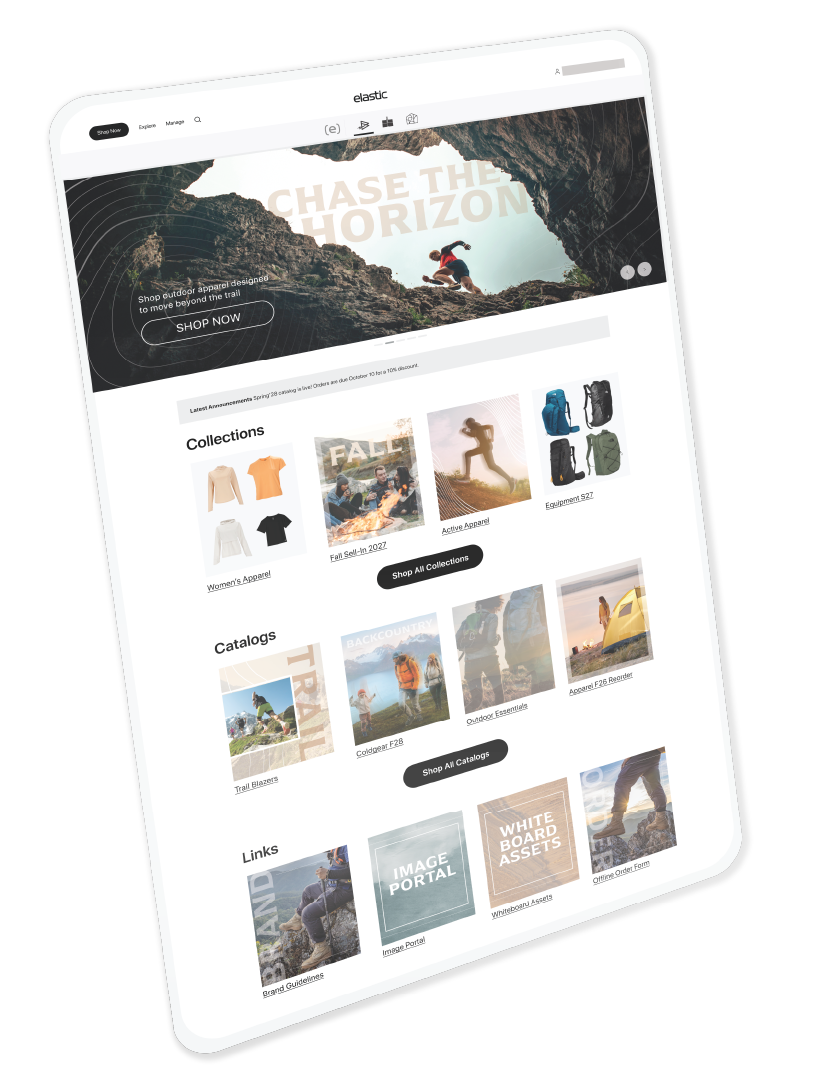
Elastic helps brands support this always-on selling motion by connecting product, inventory, pricing, and ordering information in one wholesale workflow. Sales teams can build account-specific assortments while buyers can review and place orders when their budget is available.
How can sales reps build stronger OTB-focused proposals?
Sales reps can make OTB conversations more productive by starting with the retailer’s business instead of the brand’s line.
Lead with sell-through data
Buyers need to know what will sell. Use historical performance, comparable accounts, category trends, and retailer-specific insights to support recommendations.
Build around retailer budget
Don’t send a buyer an entire line and ask them to decide what fits. Build an assortment around the account’s category needs, margin targets, delivery windows, and budget.
Give buyers options
A single proposal can create an all-or-nothing decision. Give buyers flexibility with a core assortment, a larger opportunity, or a prioritized option if budget changes.
Use current inventory data
A recommendation only works if the inventory is available. Keep proposals tied to current inventory so buyers can act with confidence.
Follow the next OTB window
If the timing doesn’t work, track the account’s next budget cycle and return with updated inventory, performance data, and a refined assortment.
Why does OTB alignment strengthen retailer relationships?
OTB alignment changes the sales conversation.
Instead of asking, “How much of our line can you buy?”, brands can ask, “What can we help you accomplish with the budget you have available?”
That shift makes the brand a more useful partner. Sales teams can recommend products based on the retailer’s needs, respond when budget opens, and help buyers decide faster.
It also creates a more consistent wholesale experience. Buyers can plan, review assortments, and place orders when it works for their business rather than when a brand’s selling calendar dictates it.
For brands, the result is a more responsive sell-in process, fewer manual steps, and more opportunities to capture available budget throughout the year.
How can brands start aligning sell-in with OTB?
Start with your top accounts.
Document each retailer’s OTB cadence. Review historical order timing. Identify when buyers typically allocate seasonal and at-once budget. Then build those windows into your sales calendar.
From there, give sales teams the data they need to act quickly. Current inventory, pricing, product performance, and account-specific assortment recommendations can turn an available budget into an order.
Brands that win more wholesale business don’t just sell when their calendar says it is time to sell. They sell when their retailers are ready to buy.
Elastic is a complete wholesale commerce platform that connects brands, retailers, and sales teams so they can plan, sell, and order year-round.
Request a demo to see how Elastic can help your team build a more responsive wholesale selling process.
FREQUENTLY ASKED QUESTIONS
Still have questions?
What is Open-to-Buy in wholesale retail?
Open-to-Buy is the amount of budget a retailer has available for new inventory purchases during a specific period. Retailers use OTB to balance planned sales, inventory levels, existing orders, and new purchasing commitments.
How does OTB affect wholesale sell-in?
OTB determines whether a buyer has a budget available to place new orders. Aligning sell-in activity with OTB refresh and allocation windows can help brands reach buyers when they can commit.
When should brands present wholesale assortments?
Brands should present assortments based on each retailer’s buying and OTB cycle rather than relying solely on trade show or seasonal calendars. The specific timing varies by account.
What is at-once ordering?
At-once ordering allows retailers to purchase inventory that is available for immediate shipment. These orders can help retailers use available mid-season budget for replenishment, emerging demand, or inventory needs.
How can brands capture more at-once orders?
Brands can improve at-once sales by maintaining accurate inventory visibility, supporting year-round ordering, and responding quickly with relevant assortments when buyers have budget available.
How does Elastic help brands sell throughout the year?
Elastic gives brands and retailers a digital wholesale environment for planning, assortment building, and ordering beyond seasonal selling events. It helps sales teams respond with current product, inventory, and pricing information when buyers are ready to purchase.