

Collaborative assortment planning: a better way to build retailer-ready buys
KEY TAKEAWAYS
• Collaborative assortment planning helps brands and retailers build account-specific product mixes based on buyer needs, performance data, and inventory goals.
• Visual assortment planning tools make line reviews faster by helping buyers evaluate products, refine selections, and identify gaps in real time.
• Connecting assortment planning and wholesale ordering reduces manual work, speeds up purchasing, and supports more confident orders and stronger retailer relationships.
What is collaborative assortment planning?
Collaborative assortment planning brings brands and retail buyers together to build the right product mix for each account.
Instead of walking a buyer through an entire collection and waiting for them to decide what works, the sales team comes prepared with a recommendation. The buyer can then react to the assortment, make changes, and build that season’s buy
with the brand.
These conversations consider more than the products a brand wants to sell. It takes a deeper look into what the retailer’s customers buy, which products have performed well, how the assortment fits the retailer’s strategy, and how much inventory the retailer can support.
This changes the sales team’s role. Instead of walking a buyer through an entire line, the conversation can become more focused.
Why does assortment planning matter to retail buyers?
Retail buyers need every product on their floor to earn its place. They are balancing customer demand, inventory, margin, available space, and open-to-buy budgets. A product that looks good in a collection still needs to make sense for that retailer’s customer.
That’s why buyers value brands that come prepared with relevant recommendations rather than asking them to look through hundreds of products on their own. It’s an opportunity to build a stronger relationship with partners and make the buying decision together.
A focused collection gives buyers a place to start. From there, the conversation can move quickly. Keep the products that fit. Remove the ones that do not. Adjust the mix based on what the buyer knows about their business.
How can brands build assortments with retail buyers?
Brands can make collaborative planning more effective by combining visual product selection, account-specific recommendations, and a direct path to ordering.
1. Start with a curated collection
Retail buyers do not need to see every product in a catalog. They need to see the products that make sense for their business.
Sales teams can use previous orders, product performance, retailer preferences, and seasonal needs to create a starting assortment. From there, the buyer can add, remove, or adjust products during the review.
Elastic makes this easier by giving sales teams a place to build retailer-specific assortments before the line review. Instead of starting with a full catalog, reps can walk into the meeting with a collection built around the account. This gives both sides a clear starting point and keeps the conversation focused.
“If we carry a brand across multiple locations, I build a master assortment with the rep during the showing, then copy that workbook into assortments by store or store grouping. It’s completely streamlined my order-writing workflow.”
– Chelsea Prager, Senior Retail Buyer, Alterra Mountain Company
2. Make the assortment visual
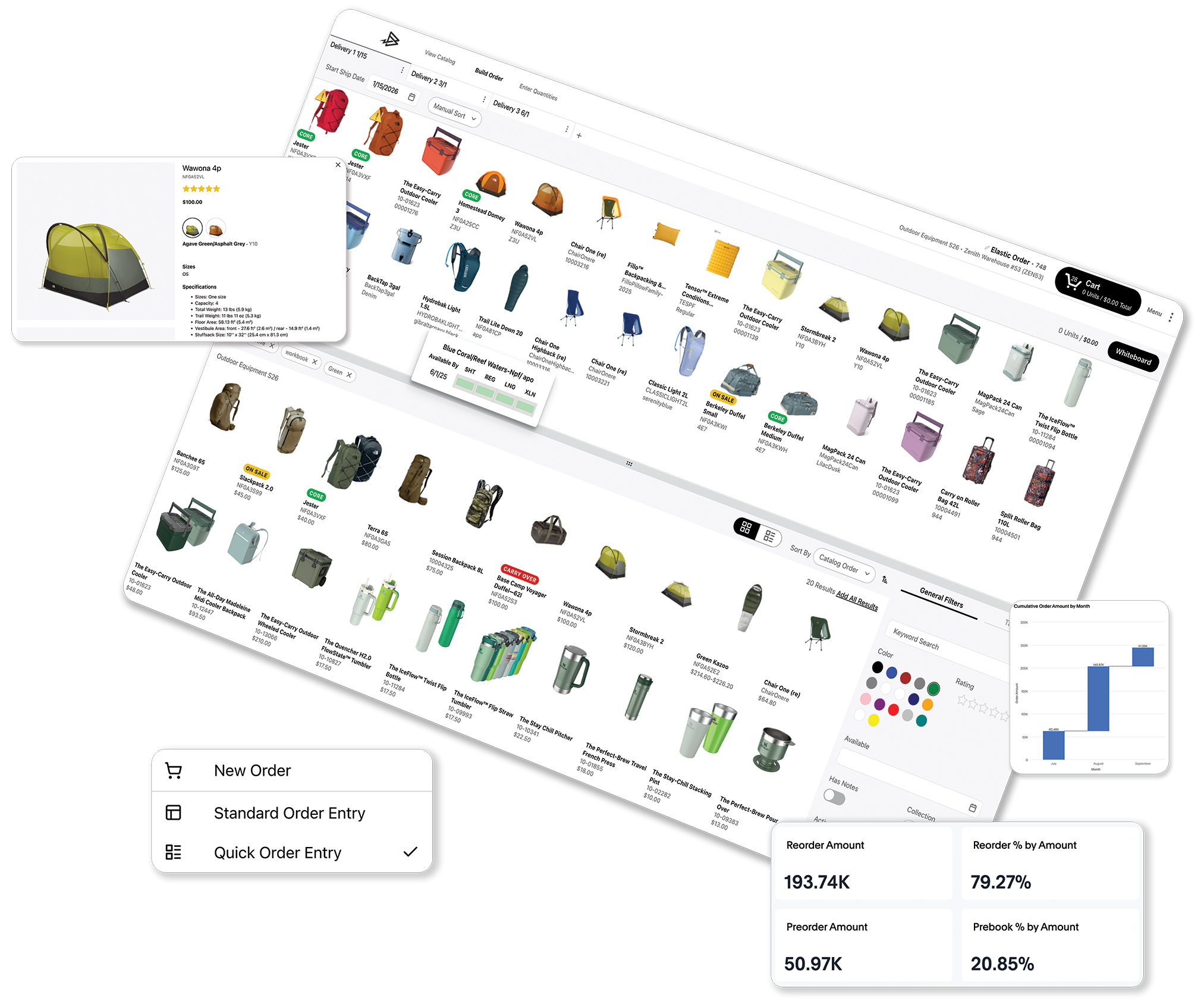
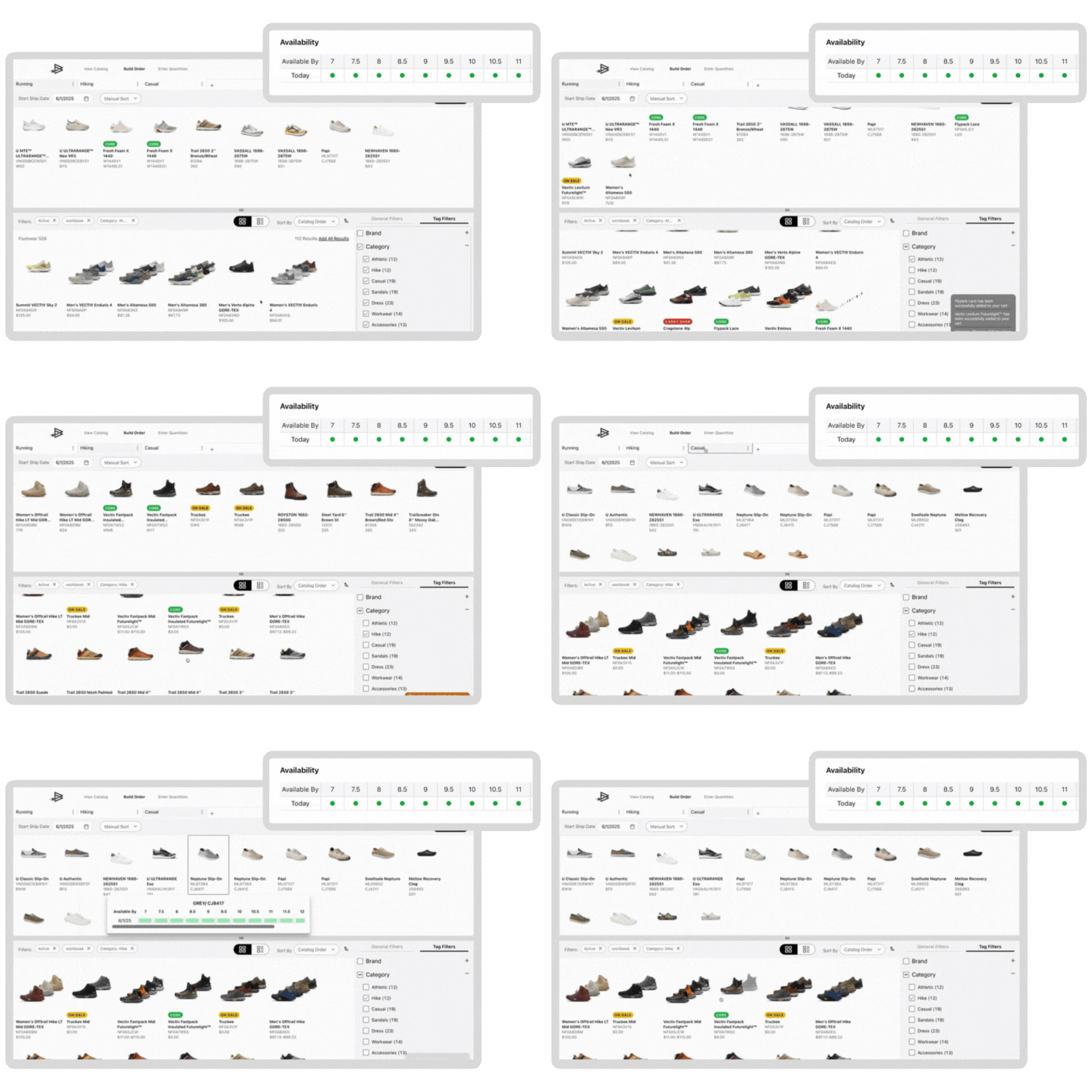
Product images help buyers understand the assortment quickly. A visual line builder makes it easier to spot gaps across categories, colors, product types, and price points. Buyers can evaluate the collection instead of working through a list of style numbers.
With Elastic, teams can take that step further by bringing the assortment into a visual Whiteboard to show how products work together. Buyers can see the collection together and visualize how the line could come to life in the store.
The result is a more interactive review process where buyers can react, make changes, and build the right assortment in real time.
“Whiteboards are an absolute necessary tool to take this sales experience to the next professional level… it really helps instill their trust in me as a rep, because I know how much space they have in the store and the type of assortments they like to build. I don’t want to just sell it to them — I want it to sell through.”
Andy Duffy, Sales Rep
3. Use real-time information to guide decisions
The best assortment decisions combine product context with business context.
Brands can use pricing, availability, order history, and other account information to help buyers understand the impact of their selections. When that information is available during the conversation, teams can decide without stopping to check another system or following up later.
4. Move from planning to ordering
Planning should not end when the buyer makes their selections.
When a buyer confirms their selections, the next step should be clear. The assortment should move naturally into the ordering process without requiring the sales team to recreate it in another system.
Elastic connects the planning and ordering experience so brands can move from building the order to placing it without unnecessary manual work.
How do interactive line reviews improve wholesale selling?
Supercharge planning by combining visual product selection, account-specific recommendations, and a direct path to ordering.
Come prepared
Review the retailer’s previous orders and identify products that performed well or need a different approach
Recommendations
Start with a focused assortment built around the retailer’s business instead of presenting the entire line
Build together
Give the buyer an easy way to add, remove, or adjust products during the conversation
Discuss inventory
Large assortments aren’t better. Focus on the products that give retailers the best chance of sell-through
Capture decisions
Do not wait. Move confirmed products into the ordering process while the conversation is fresh
How does collaborative planning reduce inventory risk?
Better planning starts with better product selection.
When brands and retailers review an assortment together, they can identify overlapping products, remove items that don’t fit the account, and focus investment on products with stronger potential.
That can help retailers avoid buying too broadly while giving brands a clearer view of what each account needs.
The process also creates a better feedback loop. Brands can use what they learn from one season to build more relevant assortments for the next.
Over time, those conversations can lead to stronger sell-through, more confident pre-books, and more productive retailer relationships.
How does Elastic support collaborative assortment planning?
Elastic connects the brand, sales team, and retailer throughout the wholesale buying process.
Sales teams can build account-specific assortments, present them visually, collaborate with buyers, and move selections into an order without recreating the work. This makes the buying experience part of the retailer relationship.
When buyers can quickly find products, understand the assortment, make changes, and place orders in one connected experience, brands make it easier for retailers to do business with them.
When retailers prefer the buying experience, brands have a stronger foundation for repeat orders and long-term account growth.
What does better assortment planning look like?
Better assortment planning is not about putting more products in front of a buyer. It’s about giving them a better way to decide what belongs in their stores.
The brand comes prepared. The buyer brings knowledge of their customer and business. Both sides can see the assortment, discuss what works, make changes, and move forward with confidence.
Elastic supports that process by connecting visual merchandising, assortment planning, and wholesale ordering in one experience. This gives brands and retailers more opportunities to collaborate, refine assortments, and build lines around the products most likely to sell.
When brands make that experience easier for retailers, they do more than improve one line review. They build a wholesale experience retailers want to come back to.
Build better assortments with Elastic
FREQUENTLY ASKED QUESTIONS
Still have questions?
What is collaborative assortment planning?
Collaborative assortment planning is the process of building and refining a retail product assortment with a buyer. Both teams contribute to the selection based on the retailer’s customers, business needs, inventory considerations, and buying strategy.
Why is collaborative assortment planning important for wholesale brands?
It helps brands create more relevant assortments, reduce unnecessary manual work, and strengthen retailer relationships. It also gives sales teams a more strategic way to approach line reviews.
How can brands improve retail buyer line reviews?
Brands can improve line reviews by preparing account-specific recommendations, using visual product presentations, reviewing previous buying activity, collaborating on the assortment in real time, and quickly moving confirmed selections into an order.
How does visual assortment planning help retail buyers?
Visual assortment planning lets buyers evaluate products as a complete collection instead of reviewing individual style numbers. This makes it easier to identify gaps, overlaps, and opportunities across the assortment.
How can assortment planning reduce inventory risk?
A collaborative process helps brands and retailers focus on products that fit the retailer’s customers and business. More targeted assortments can reduce unnecessary purchases and give retailers greater confidence in their inventory decisions.
How does Elastic support assortment planning?
Elastic connects digital merchandising, assortment planning, retailer engagement, and wholesale ordering in one platform. Brands can create account-specific assortments, collaborate with buyers, and move selections into the ordering process without rebuilding the work.